


When Does Building Maintenance Turn Into a Remedial Project?
Updated: Sep 25
A water stain on a commercial ceiling can be easy to treat as a minor maintenance issue. But if the source of the leak isn't identified, the damage can continue to spread.
That gap between when a problem starts and when someone notices it is where regular inspection and building maintenance can make a difference.
Regular inspections can help identify problems while they're still manageable. On many commercial sites, though, maintenance only happens after something becomes impossible to ignore. By then, you're potentially dealing with water damage, deterioration or disruption on top of the original problem.
Take that ceiling stain. Patching the ceiling might make the visible problem disappear temporarily. Finding the point where water is actually entering the building is what prevents the same issue from coming back.
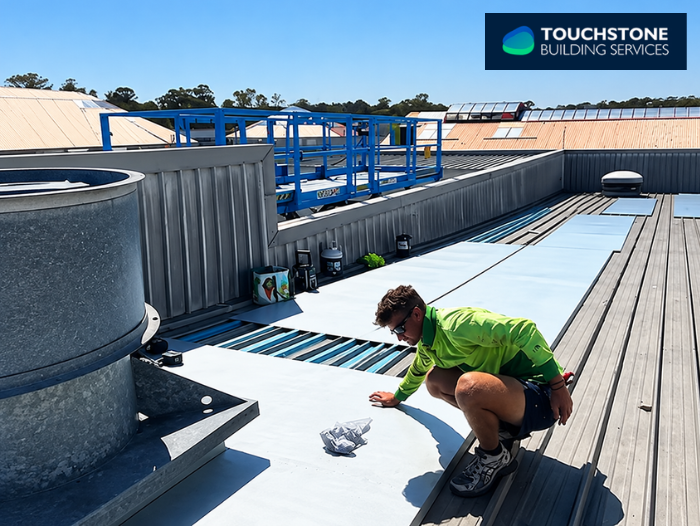
Where Building Maintenance Sits on a Commercial Site
Depending on the property, building maintenance can involve a range of areas, including:
Roofs and roof drainage
Gutters and box gutters
External structures
Walls, fencing and retaining structures
Warehouse areas
Commercial interiors
Areas affected by previous building work
Some problems are easy to spot, such as a cracked panel, damaged fence or gutter pulling away from its brackets. Others can remain hidden for weeks or months.
Roofs are a good example. A section can deteriorate gradually without showing any obvious signs from ground level. When water eventually appears inside, the visible damage may be well away from the actual entry point.
Whether that develops into a minor repair or a larger remedial project often comes down to how extensive the problem is, whether it has happened before, and how long it has been left unresolved.
Warning Signs That Need a Closer Look
Most maintenance issues can be dealt with as straightforward repairs. Some, however, deserve more investigation before anyone starts patching or replacing individual components.
A leak keeps coming back
If a roof repair works for a short time and the leak returns, the original repair may have addressed the symptom rather than the cause.
Repeated leaks can point to deteriorating roofing materials, drainage problems, failed flashing or another issue that needs to be properly identified.
A roof audit can help establish what is actually happening and whether the appropriate solution is a local repair, restoration or complete replacement.
The roof is showing several problems at once
One damaged section doesn't necessarily mean the entire roof needs work.
But when leaks, soft areas, blocked drainage points, deteriorated materials or other warning signs start appearing together, it's worth looking at the roof as a whole.
Fixing each problem separately can become an expensive cycle if the underlying condition of the roof isn't considered.
Water is appearing somewhere it shouldn't
Not every water problem starts with the roof.
Blocked or damaged gutters and box gutters can prevent water from draining correctly. Instead of flowing away from the building, water can find another route through walls, into ceilings or into internal areas that appear completely unrelated to the original blockage.
Clearing the gutter may resolve the immediate issue, but a proper inspection should also consider why the drainage system failed in the first place.
Walls, fences or retaining structures are moving or cracking
External structures are easy to overlook because they're not part of the main interior space.
Cracking, movement or deterioration in a wall, fence or retaining structure can result from impact, ground movement, weather exposure or age. A small crack may be relatively straightforward to address, while continuing movement can indicate a much larger problem.
Before deciding on a repair, it's worth establishing whether the damage is isolated or part of a wider issue.
When Building Maintenance Requires More Extensive Work
The line between a maintenance repair and a remedial project isn't always obvious at the beginning.
A leaking roof might require nothing more than a local repair. But if the leak keeps returning, several areas are affected, or the underlying roof or drainage system has deteriorated, repeatedly patching the visible problem may no longer be the most sensible option.
In these situations, the cause and extent of the problem need to be properly assessed before deciding on the right work.
Rather than repeatedly addressing the visible damage, it's important to identify the underlying cause and determine the extent of the work required.
The scale of the work is another important factor. Major roof restoration or replacement, warehouse make-good work and refurbishments can involve several trades, multiple stages and ongoing coordination.
Once the work involves multiple trades or several stages, it needs proper planning, scheduling and project management rather than being treated as a series of individual repairs.
This becomes particularly important when the business needs to remain operational while work is underway. Deliveries still need to arrive, staff and customers need safe access, and disruption needs to be kept under control.
Good project and construction management coordinates the contractors, schedules, site meetings, progress monitoring and final handover so the work fits around the business rather than the other way around.
How to Tell Whether You Need a Repair or Something Bigger
Before approving another quick fix, it helps to ask a few basic questions:
Where is the problem actually showing up?
The visible damage may not be where the underlying fault is located.
When did the problem start?
A recent, isolated issue is different from something that has been developing for months.
Has it happened before?
If the same repair has already failed, it's worth investigating the cause rather than repeating the same solution.
Does it change with the weather?
Problems that appear during or after heavy rain can provide important clues about roofing and drainage.
Is anything else on the property showing signs of deterioration?
A roof issue, drainage problem or deterioration in one part of the building may be connected to other areas.
Will the work involve more than one trade or several stages?
If so, treating it as a properly scoped project from the beginning can be more efficient than managing individual repairs separately.
One isolated problem with no history of recurrence may still be a straightforward maintenance job.
When damage has spread, previous repairs have failed, several building elements are involved or multiple trades are required, it's worth investigating the wider issue before committing more money to individual fixes.
Where does Touchstone Building Services work?
Touchstone Building Services works across Brisbane, the Gold Coast and the Sunshine Coast, providing commercial project management, construction management and fit-out services.
Its project experience includes roof audits, roof replacement and restoration, dry pan and box gutter work, warehouse make-good projects, retaining wall work and fencing.”
Final Thoughts
Not every recurring leak, deteriorating roof or damaged drainage system means a major building project is needed.
But if the same issue keeps returning, the damage is spreading, or previous repairs haven't fixed the problem, it's worth taking a closer look. Finding out what's causing the issue early can make it easier to choose the right solution and avoid spending money on repairs that only provide a temporary fix.
Need Help With a Building Issue?
If you're unsure whether your commercial property needs routine maintenance, a roof repair, refurbishment or more extensive building work, Touchstone Building Services can help. Their team can assess the requirements and coordinate the right approach for your project. Contact us to discuss your building needs and find out what approach may be right for your property.
Frequently Asked Questions
How often should a commercial building be inspected?
There's no single inspection frequency that suits every commercial property. It depends on factors such as the age and condition of the building, the roof and drainage systems, how heavily the site is used and whether there is a history of maintenance problems.
Having a planned inspection and maintenance schedule is preferable to waiting until a tenant or employee reports an issue.
What does a roof audit actually involve?
A roof audit involves inspecting the roof itself rather than trying to assess its condition from ground level.
The aim is to identify areas of deterioration, potential sources of leaks, drainage issues and other defects, then determine what type of work is likely to be appropriate.
Depending on the condition of the roof, the outcome may be a recommendation for local repairs, restoration or replacement.
Can remedial building work happen while the business keeps operating?
In many cases, yes.
Commercial work needs to be planned around access requirements, operating hours, deliveries, staff, customers and other site activities. Proper project management helps coordinate the work so disruption and safety risks are controlled throughout the project.
Comments